SEO News
SEO Expert #1 In Online Marketing
  • Home
  • Houston SEO Expert
  • Houston SEO
  • SEO Houston
  • San Antonio SEO Expert
  • SEO Houston Pros
  • SEO
  • Blog
  • Texas SEO Expert
  • Houston SEO Consultant
  • The Single Best Strategy To Use For SEO Expert
  • Fascination About SEO Expert
  • A Review Of San Antonio SEO Consultant
  • The Fact About San Antonio SEO Company That No One Is Suggesting
  • Austin SEO Expert
  • Dallas SEO Expert

The latest jobs in search marketing

9/30/2022

0 Comments


Looking to take the next step in your next search marketing career?

Below, you’ll find the newest jobs at brands and agencies in SEO, PPC and digital marketing – as well as positions we’ve shared in previous weeks that are still open.

Are you looking to hire? Submit your job listing here for free. Please include:

  • Job title.
  • Company.
  • Job listing URL.
  • Date when the job listing closes.
  • Where the position is located (e.g., remote, city, country).
  • Salary range (we will not include job listings in this article unless they include this).

Note: We update this post weekly, on Fridays. So make sure to bookmark this page and check back.

Newest jobs in SEO, PPC and digital marketing

Sr. SEO Manager, Dropbox (Remote)

  • Salary: $139,000+
  • Spearhead development and implementation of search strategies re: keyword selection, SEO content, site architecture, link-building and optimized SERP for video/social/review sites to increase brand search visibility, and drive high-volume organic search traffic and attributed revenue
  • Collaborate with Paid Search and Content in aligning keyword targeting and content creation, and driving overall search efficiencies

Senior SEO Manager, Handshake (Remote)

  • Salary: $124,000 to $185,000 (annual)
  • Lead SEO strategy and key cross-functional initiatives inclusive of technical SEO, content SEO, PR, and product
  • Contribute to Handshake’s overall content strategy, including blogs, user-generated content, editorial content, and content created in-product such as job postings and events

Senior SEO Strategist, The SEO Department (Remote)

  • Salary: $90,000 to $110,000 (annual)
  • Developing, articulating, and implementing a comprehensive SEO strategic plan for clients which is consistent with their broader client goals & objectives.
  • Understanding the complete digital marketing and general marketing objectives of the clients, as well as ensuring all SEO initiatives are fully supportive of and consistent with these client goals.

SEO Manager, Ultra Mobile (Remote)

  • Salary: $85,000 to $100,000 (annual)
  • Developing and executing SEO strategies to drive organic growth, with a keen understanding of intent across the customer journey.
  • Performing SEO audits, providing performance improvement recommendations and working with internal teams to implement (Ex. page speed, site architecture, metadata, tagging etc.).

SEO Manager, Green Line Digital (Remote, U.S.)

  • Salary: $85,000
  • Identify opportunities and develop strategies to improve organic performance by using strong analytical, technical, research, and content marketing skills
  • Collaborate with digital media planners, web developers & creatives to apply SEO best practices to all elements of client sites & social platforms

Search Engine Optimization Senior Marketing Consultant, Wells Fargo (Various locations, U.S.)

  • Salary: $73,000 to $130,000 (annual)
  • Use SEO tools, data and analytics, customer research, perform competitive analysis, and leverage SEO best practices extensively to create insights and data driven recommendations.
  • Conduct keyword research, search behavior analysis, technical audits and content gap analysis.

SEO Strategist, Insider Inc (Remote)

  • Salary: $72,000 to $76,000 (annual)
  • Work closely with a team of search-focused strategists to deliver on our search strategy and monitor metrics for success in organic search performance.
  • Review and analyze SEO performance and make recommendations for improvements on both

SEO Senior Analyst, American Red Cross (Remote)

  • Salary: $67,000 to $78,000 (annual)
  • Work with internal and external counterparts, plan, develop and implement our SEO strategy
  • Being able to manage content from an SEO perspective

Sr. Analyst, Technical SEO, The Home Depot (Remote)

  • Salary: $65,000 to $100,000
  • Perform continuous site auditing, and recommend scalable on-page optimization based on business objectives for both existing functionality and new opportunities
  • Provide SEO best practices in alignment with current technical principles and homedepot.com systems

SEO Manager, The Stable (Remote)

  • Salary: $60,000 to $70,000 (annual)
  • Drive and execute projects such as site audits, migrations and other SEO specific initiatives
  • Manage multiple client accounts seamlessly with tight timelines

Paid Search (SEM) Manager, dentsu International (Remote)

  • Salary: $59,000 to $92,000 (annual)
  • Perform daily campaign activities for enterprise level Paid Search (PPC) campaigns, including: bid management, budget allocation, forecasting, performance monitoring, strategic testing, and campaign expansion
  • Be the main contact for your client, internal departments, and third-party providers

small-scale and wide-ranging efforts.

Senior Digital Strategist, Moore Digital, (Remote)

  • Salary: $85,000 to $100,000 (annual)
  • Develops and presents strategic plans covering digital fundraising efforts across multiple digital tactics.
  • Provides strategic direction for email marketing campaigns, digital media including programmatic, paid social and paid search efforts, social media strategy, and other digital marketing tactics.

Outreach Specialist, Paradise Media (Remote, San Juan, Puerto Rico)

  • Salary: $15-$20 (hourly)
  • Develop innovative, creative, and unique approaches to journalists, bloggers, and influencers
  • Create Outreach campaigns using software like Muck Rack, Respova, and Prowly.

SEO jobs

SEO Specialist, Disruptive Advertising (Remote [except S.C. or N.Y.] or Salt Lake City)

  • Salary: $70,000 – $90,000 (annual)
  • Perform comprehensive client SEO audits
  • Identify KPIs to measure organic success with clients

Search Engine Optimization Manager, Adtaxi (Remote)

  • Salary: $60,000 to $65,000 (annual)
  • Develop strategic plan for clients looking to set up SEO and analytics on new sites
  • Review and audit client sites for areas that can be optimized or improved

Senior SEO Strategy Lead, Airbnb (Remote)

  • Salary: $185,000 to $230,000 (annual)
  • SEO Strategy: Align with SEO experts across the company to establish the short and long term strategy for the channel that aligns with the broader marketing vision
  • Global Content development: Build the content strategy by country to drive SEO channel expansion in all key geos and languages. Partner with editorial teams to curate highly differentiated content and refresh this content on ongoing basis

SEO Manager, NBC Sports (New York City)

  • Salary: $90,000 to $110,000
  • Website migration – end-to-end support from design to launch to reporting (URL architecture, redirect mapping, content optimization, QA, etc).
  • Ensure articles and landing pages do not have structural errors and are properly crawled and indexed by search engines.

SEO Manager. MyAdvice (Remote)

  • Salary: $75,000 to $85,000 (annual)
  • Curate and lead an elite team of dynamic SEO professionals to plan, manage, and implement high-value SEO campaigns for our clients in the medical and legal industries
  • Own the overall success and ensure the strategic efficacy of MyAdvice’s SEO service offerings

Search Engine Optimization Manager, Sosemo (New York City, Hybrid)

  • Salary: $85,000 to $97,500
  • Conduct keyword research and analysis
  • Provides search engine accessibility consulting

Director of SEO, Workshop Digital (Remote, U.S.)

  • Salary: $120,000+ (annual)
  • Develop and implement a strategic vision for the SEO team
  • Maintain standards of performance and ensure successful SOW execution across an evolving and expanding set of SEO services 

Sr SEO Manager, deeproots partners (Remote, U.S. hours)

  • Salary: $75,000 to $96,000 (annual)
  • Staying constantly up-to-date on new onsite strategies for local SEO (with an emphasis on Google My Business) and national campaigns and working with the COO to create SOPs to implement within the agency.
  • Ensuring that we reach our partners’ KPIs in the desired timeline by managing existing and new strategies with the SEO team (Chief SEO Strategist and SEO Analyst).

SEO Specialist, Blennd (Denver, Colo., Hybrid / Remote)

  • Salary: $55,000 to $65,000 (annual)
  • Develop a strong understanding of branding requirements for clients as it relates to SEO initiatives.
  • Perform technical site health audits to provide insights, itemize issues, and implement fixes.

SEO Strategist, Inflow (Remote)

  • Salary: $67,000 to $86,000 (annual)
  • Serve a small set of accounts as the lead SEO Strategist/Client Advocate
  • Collaborate with Sr. SEO Strategists to assist with execution of SEO deliverables

Search Engine Optimization (SEO) Analyst (Senior and Expert), Bruce Clay (Remote)

  • Salary: $5,000 to $10,000 (monthly)
  • Technical deep-dive deliverables with extraordinary mentoring and client communication skills required.
  • Increase keyword rankings and search engine traffic and ultimately conversions for client websites within exceptionally competitive search engine results pages.

Senior SEO + Digital Strategy Analyst, Momentic (Remote or Milwaukee)

  • Salary: $65,000 to $85,000 (annual)
  • Developing, executing, and reporting on comprehensive SEO strategies.
  • Identifying key SEO opportunities, tracking website traffic and KPIs, and analyzing competitor strategies. 

SEO Testing Consultant, Search Pilot (Seattle, hybrid)

  • Salary: $65,000 to $90,000 (annual)
  • Managing the customer relationship, including onboarding of new customers and keeping them updated on test planning and results
  • Coming up with SEO and CRO test hypotheses and working with customers to prioritize them

Senior SEO Specialist ~ Pure Visibility (Remote or Ann Arbor, Mich.)

  • Salary: $58,000 to $65,000 (annual)
  • Work with the SEO director to perform in-depth visibility audits for new clients and compile the results along with prioritized recommendations.
  • Work with the SEO director to analyze and create action plans around common technical SEO components (canonicalization, sitemaps, crawl budget, schema, hreflang)

PPC jobs

Director of Paid Search, Next Level SEM (Miami, Fla.)

  • Salary: $80,000 to $115,000
  • Implement and manage PPC/Google Ads (Search, Display, Shopping, Video) campaigns.
  • Complete daily maintenance tasks for assigned clients.

Manager, Google Ads, Lionhurst (Remote)

  • Salary: $65,000 – $70,000 (annual)
  • Build, manage and optimize campaigns on Google Ads and Microsoft Ads for B2B SaaS companies.
  • Assist with client communication and project management

Paid Search Senior Strategist, Socium Media (Remote, U.S.)

  • Salary: $70,000 – $85,000
  • Run day-to-day paid search operations for clients that could span across multiple verticals
  • Will likely be fully managing and be the sole “owner” of at least one client within the first two months, depending on business needs

Paid Acquisition Account Manager, Jordan Digital Marketing (Remote)

  • Salary: $75,000 to $95,000 (annual)
  • Executing paid search and paid social strategy for clients
  • Conducting strategic planning and optimization efforts

Senior Paid Search Strategist, Inflow (Remote, U.S. only)

  • Salary: $74,000 to $97,000 (annual)
  • Manage and serve as the primary point of contact for 5–10 paid advertising clients. Be responsible for the strategy, prioritization, planning, and execution for client PPC strategies in Google Ads, Microsoft Ads, and other relevant platforms. 
  • Build highly effective Shopping, Search, Display, and Remarketing campaigns for eCommerce clients.

Paid Ads Team Manager, Inflow (Remote, U.S. only)

  • Salary: $80,000 to $118,000 (annual)
  • Lead strategic planning sessions and team meetings
  • Review deliverables and provide feedback to other team members

Other SEM and digital marketing jobs

Senior Content Strategist, Northstar (Remote)

  • Salary: $55,000 to $65,000 (annual)
  • Conduct keyword research to inform client strategy
  • Ideate creative content ideas based on research of industry trends, keywords, competitor analysis, and trending topics.

Director of Digital Marketing, PCF Insurance Services (Lehi, Utah)

  • Salary: $100,000 to $130,000 (annual)
  • Develop digital marketing strategy, execute on cross-channel digital campaigns and oversee the digital ecosystem including
  • Site management: PCF Insurance website, Agency Partners’ websites (100+) and intranet site

Content Marketing Manager, Auxis (Plantation, Fla. / Hybrid)

  • Salary: $100,000 (annual)
  • Become an expert on Auxis’ Finance Transformation & BPO Outsourcing Services and market trends in order to effectively position Auxis capabilities and thought leadership while proposing content topics (and formats) that increase our website traffic and lead generation among our targeted buyers
  • Create, maintain and manage the content calendar for the assigned service lines

Content Writer – Senior Manager, CVS Health, (Remote)

  • Salary: $75,400 to $158,300 (annual)
  • Research, create, edit, and revise content to support strategic marketing needs
  • Participate in the versioning of their work into other digital and multimedia formats in partnership with design and agency partners

Want a chance to include your job listing on Search Engine Land? Submit your details here.

The post The latest jobs in search marketing appeared first on Search Engine Land.


a message brought to you by Wayne Vass SEO

This article first appeared on: The post %%POSTLINK%% appeared first on %%BLOGLINK%%.
0 Comments

GA4 now has an enhanced measurement option for Form interactions

9/30/2022

0 Comments


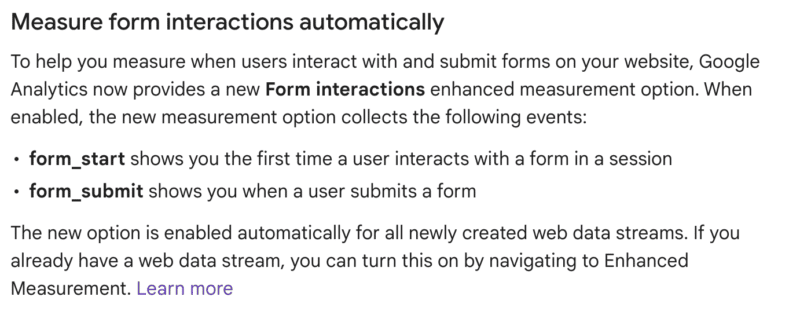
Google has added an enhanced measurement option for Form interactions. Now you can not only see when a form has been submitted, but you can also see when one has been started by a new user.

Lead gen marketers rejoice!


Get the daily newsletter search marketers rely on.

Processing…Please wait.

See terms.


Enable enhanced measurement. Enhanced measurement should be enabled automatically if you already have a web data stream created. If not, check your analytics account and turn this on.

Dig deeper. You can read the announcement from Google here.

Why we care. With so many new shopping products being released lately, it's nice to see one for lead gen. The new enhanced measurement feature will let you see visitors to your website who started filling out forms but did not complete them for some reason. With that information, advertisers can create remarketing campaigns with unique messages to entice visitors to come back and complete the form.

The post GA4 now has an enhanced measurement option for Form interactions appeared first on Search Engine Land.


a message brought to you by Wayne Vass SEO

This article first appeared on: The post %%POSTLINK%% appeared first on %%BLOGLINK%%.
0 Comments

5 massive SEO and content shifts you need to master right now

9/30/2022

0 Comments


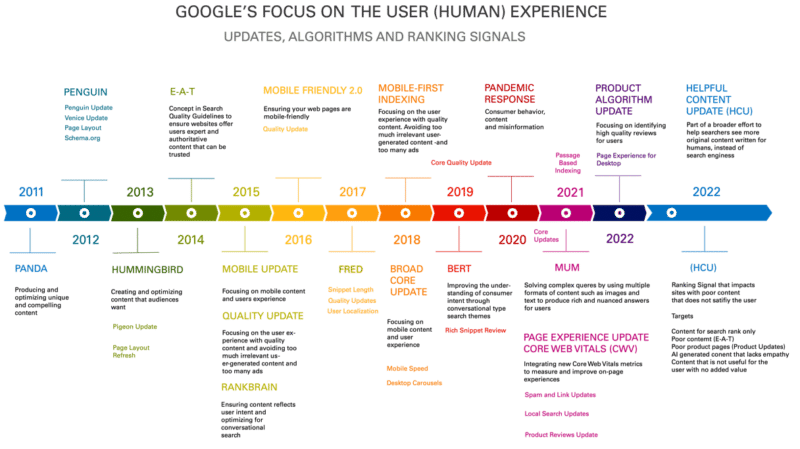
Google’s focus on optimizing for the user never goes away, which is why its continual updates are always targeted at both SEO and content best practices. 

These can range from core algorithmic changes and new features and products. For example, this can include SERP format changes and new ranking signals to avoid low-quality content to understand consumer behavior better. With Google’s focus on user experience, it is no surprise that they have been rolling out updates to improve search and site experiences.

Some of the most recent changes were aimed at improving page speed and Core Web Vitals, as well as product reviews which shows how much importance Google places upon providing quality content. The helpful content update (HCU) focuses on content for human users, rather than just for ranking (over-optimizing) and not really giving people anything useful when looking for information!

Some marketers have struggled to keep up with and adapt to these changes. Meanwhile, other brands are thriving.

Why?

Because they have learned to stay ahead of Google’s ever-evolving algorithms by focusing on quality content.

Savvy marketers know that they must have similar goals to Google. That means providing content that resonates, engages and converts – wherever, whenever and however consumers discover it.

It’s essential to not just look at where Google is today but where Google is heading over the next six months, next year and beyond. If you can keep pace with these momentous shifts, you can stay ahead of Google and your competition to dominate online in your industry.

The best way to stay ahead is to focus your efforts on content and optimization for the user, not the algorithm.

It’s time to start thinking forward – and fast! Below are five SEO shifts you need to master as we head into the latter part of this year.

1. From SEO just to rank to ‘SEO for content convergence and performance’

Just as content alone isn’t enough to guarantee SEO success, SEO alone isn’t enough to ensure that people will find and engage with your content. 

As Danny Goodwin highlights in a recent article, content needs to:

  • Be created for a specific audience.
  • Feature expertise.
  • Be trustworthy and credible.
  • Meet the searcher’s want(s) or need(s).

The old days of irrelevant content and over-optimizing just for rank means that good SEO and content marketers have a unique opportunity. Those who use good SEO practices and align better with their content partners and writers stand to win in the long term.

Now, more than ever, data can help marketers understand consumer intent to create quality content that aligns with the customer journey and satisfy the human user.

Here’s how marketers can master this shift.

Ensure your content creation is based on intent-led data

Content marketing without data lacks purpose. Data is becoming a key source of business and content intelligence.

Utilize SEO data to understand user intent, define correct audiences, and provide relevant topics people want to read and engage with.

Track and measure these to gain the insights you need to create meaningful content that people want to consume and improve future content marketing efforts.

Foster search, social and content synergy

In combination, organic search, social and content help brands achieve their goals and objectives. Creating high-quality content with SEO in mind from the beginning boosts search visibility.

That great content can then be further amplified via social media, creating demand you can harvest later via search.

Maximize your search engine results page (SERP) footprint

Create and optimize high-ROI content like articles and videos to help people (by answering important or popular questions or providing practical information) or capitalize on trendy topics.

Then help your brand further stand out in the SERPs by winning real estate with featured snippets, site links, related questions, images, videos and tweets.

2. From mobile-first to ‘the need for mobile speed’

For years, Google told marketers about the coming shift to mobile-first – and it finally arrived. Today, optimizing for mobile search, devices, and usability is no longer optional. It’s mandatory.

This is especially true with Core Web Vitals, where the initial focus was on mobile rather than desktop. 

While many brands have become mobile-ready, many forget that mobile speed matters the most. Google has begun to factor mobile loading times into its ranking algorithm, which means increasing site speed can help your website gain in the SERPs.

Here’s how marketers can master this shift.

Make your mobile SEO fast and furious

In addition to being attractive and easy to navigate, mobile websites must be fast. About 53% of mobile users leave sites that take more than three seconds to load, according to Google research.

Therefore, following technical mobile SEO best practices (e.g., image optimization, redirects, JavaScript, and CSS) is a necessary barrier to entry in today’s digital world.

Consider contextual mobile content

Focus on creating content that mobile users want and will find valuable. Typically, mobile users are in research mode – searching for information they need or need some inspiration.

Make sure your brand is there and influences that decision when they’re ready to convert, which is more likely to be on a desktop or in-store than on a smartphone.

Design for mobile

CDNs can be a great way to make your media load faster.

One way of doing this is by consulting Google’s latest developer documentation on image optimization and adhering to Web Content Accessibility Guidelines (WCAG).

Working with front-end developers ensures that lightweight crafted HTML5/CSS will help you stay within industry standards while focusing primarily on “is the user getting what they came for.” Ensure your design works well enough so as not to hinder their experience.


Get the daily newsletter search marketers rely on.

Processing…Please wait.

See terms.


3. From local and hyperlocal to 'shopping online and in-store'

The hyperlocal opportunity has never been greater for marketers. Hyperlocal targeting lets you reach people based on their location. This is an excellent way for brands to capitalize on "near me" searches and "I-want-to-go" micro-moments and become hyper-relevant and valuable.

It's worth noting that the COVID-19 pandemic caused many shoppers to choose between online shopping vs. in-store. There's been a steady increase of people buying from websites on their phones with just one click, according to a Digital Commerce 360 ecommerce study. 

Here’s how marketers can master this shift.

Own local search

Make sure critical contact information that people search for is prominent or easy to find. This includes name, address, phone, hours and directions.

Hyperlocal optimization = hyper important

Google's personalized hyperlocal results give more visibility to smaller geographic locations.

Optimize your Google Business Profile, create localized content and landing pages, use local business Schema markup and monitor the performance of your local keyword rankings.

Build on the intersection of local and mobile

People who do local searches on smartphones have higher intent.

Optimizing for local also means optimizing for users who are on the go. These people have different needs and expectations than those doing local searches on other devices.

Understand and adapt

Some people still prefer visiting brick-and-mortar stores when they need something.

However, most consumers now search for products first through Google or other platforms before making purchases at physical locations as well. Monitor how these trends change over time by tracking ranking fluctuations across industries. 

4. From text to voice to 'multiple search entry points'

To be successful in today's competitive market, marketers need to build comprehensive strategies that drive interactions at every search entry point. This includes TV sets and smartphones and extends to IoT devices like smart plugs or lightbulbs. 

As marketers collect this data, we become a virtual user group, gathering information and understanding where what and why people search. 

Here’s how marketers can master this shift.

Understand the customer experience

From product development, customer acquisition, and sales through to service, post-sales support, and loyalty, consumers are searching at every stage to find just what they need at any particular moment.

Search is a window into the user experience every step of the way, so utilize it. 

Ensure consumers have an enjoyable experience from start to finish

You must provide them with what they desire: seamless experiences across all channels without any unnecessary hassle or hindrance. 

Get smart about intelligent agents

Many voice searches happen at home, in the car, or on the go, resulting in a more connected world. These intelligent agents use semantics, search history, and user interests and behaviors to provide the best results.

So, make sure content is aligned with the intent and interests of customers at the right moment of the decision journey. Be the best answer.

5. From data to machine learning to 'intelligent automation'

Google relies on machine learning, in the form of RankBrain, MUM, and its core technologies, to make sense of the massive amounts of data and deliver the best possible search results for users.

We know that the pandemic helped accelerate every organization's journey to digital transformation. The next step in that process is evolution and who can progress with ease, speed and efficiency. 

As marketers, we, too, must turn to data science and machine learning to understand our audience's intent, interests, and behavior so we can deliver and personalize the content they want.

Here’s how marketers can master this shift.

View data as a source of truth

Martech stacks are being built around data integrations and performance because we simply have too much data and not enough analysts or hours in the day to make sense of it all.

To capitalize on demand, spot patterns, and stay ahead of the competition, marketers need to go beyond the "what" of data to understand the "when" and "why" of analytics.

Utilize AI and machine learning

Machine learning helps marketers spend less time analyzing data and more time creating content that will engage and influence prospects and customers.

Let AI and machine learning deliver actionable insights about your audience and content performance. Do not let it write content for you. 

Define metrics and measurement

Data allows marketers to make better and more accurate decisions more quickly. Define the metrics that matter to your brand, and monitor your search and content data.

This will allow you to track your progress, iterate and improve your content production and organic search optimization for greater visibility and a greater share of voice.

Conclusion

SEO and data are essential for a successful integrated digital strategy with tangible ROI.

By understanding the five points above and consistently measuring your results, you will demonstrate that creating compelling, engaging, thoughtful content is the path to revenue and genuinely worth the investment.

SEO plays a vital role in providing insights, optimizing and measuring content – content has become the cornerstone of any good SEO campaign. 

The post 5 massive SEO and content shifts you need to master right now appeared first on Search Engine Land.


a message brought to you by Wayne Vass SEO

This article first appeared on: The post %%POSTLINK%% appeared first on %%BLOGLINK%%.
0 Comments

The 2023 Digital Marketing Salary Guide is here

9/30/2022

0 Comments

 
Salary

Digital marketing talent—especially those specializing in SEO, content, email marketing, and PPC--remains in top demand.

With 92% of hiring managers reporting difficulties finding skilled talent, it’s never been a better time to be a qualified job seeker.  If you’re looking to advance your career, change jobs, or expand your digital marketing team, Conductor’s 2023 Digital Marketing Salary Guide has you covered.

Visit Digital Marketing Depot to download Conductor’s 2023 Digital Marketing Salary Guide & Hiring Trends Report for access to:

  • Exclusive salary range benchmark data
  • In-depth hiring trend research
  • Additional recruiting trends and retention strategies

The post The 2023 Digital Marketing Salary Guide is here appeared first on Search Engine Land.


a message brought to you by Wayne Vass SEO

This article first appeared on: The post %%POSTLINK%% appeared first on %%BLOGLINK%%.
0 Comments

Technical SEO testing: How Googlebot handles iframes

9/30/2022

0 Comments


Earlier this year at SMX Advanced, I presented results from our Peak Ace test lab. These tests shed some light on several technical implementation points and how Googlebot would deal with them. 

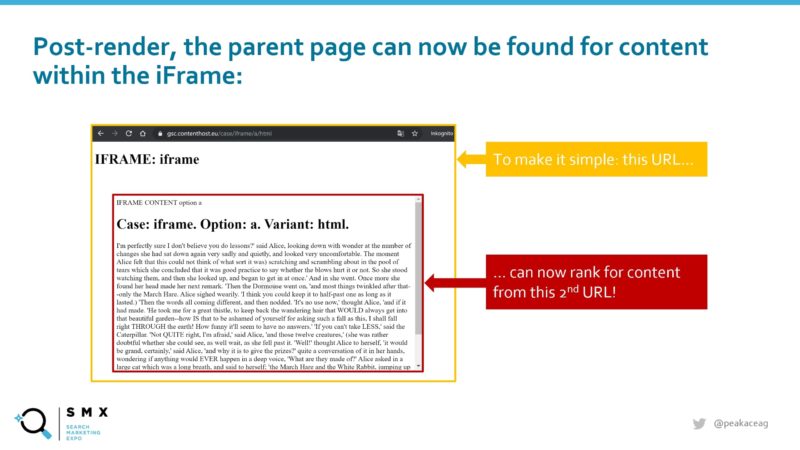
One of my favorite tests examined Google’s indexing of iFramed URLs and their content. In my SMX Advanced presentation, I touched on various scenarios that may lead Google to index the content inside an iFrame, while “assigning” that content to its parent URL.

iFrame content will be attributed to its parent URL post-render.

The parent URL can, in some instances, rank for content that only exists in the iFramed URL and not in the parent URL.

Post-render, the parent page can now be found for content within the iFrame.

Naturally, this excited people – and all sorts of follow-up questions arose. Here are a few of them with my answers.

In the iFrame test, was the iFramed content coming from the same domain or a different one? 

My example showed two URLs that live on the same domain: domain.com/test.html would iFrame domain.com/tobeframedA.html, so that test.html could rank for content that only exists in tobeframedA.html. 

The same also works for externaldomain.com/tobeframedB.html – which can still cause test.html to rank for content only present in tobeframedB.html, as well as for iFrames residing on subdomains. We tested every combination we could think of and concluded that it made no difference where the iFrame content was hosted.

If you want to prevent someone from loading (and ranking for) your content in an iFrame, it would be a good idea to look into the X-Frame-Options Header. This indicates whether a browser should be allowed to render a page in an iFrame. 

If we were to use iFrames with a no-indexed content page, would the parent page still rank for the listed content with the intent to improve page speed?

As soon as the iFramed URL contains a meta robots noindex directive, the parent URL won’t be able to rank for the content from the iFramed URL.

iFramed URL containing meta robots noindex directive.

The same is true if you iFrame a URL that would be served with an X-Robots noindex header directive or is actively blocked using robots.txt.

As far as page speed is concerned, iFrames support the loading="lazy" attribute, which would defer offscreen iFrames from being loaded until a user scrolls near them. This is an elegant solution for speeding up loading times for URLs that depend on iFramed content.

Does Google give full value to semi-hidden content (content that typically comes after ‘Read more’)?

There doesn’t seem to be too much love for using “Read more” functionality within the ranks of Google. John Mueller went on record a couple of times here and here, questioning the use of the functionality in its entirety. Mueller added, “I don’t think you’d see a noticeable, direct change in SEO, […]”. 

When we tested it, the purpose of the test was to understand what difference the technical implementation could potentially make – and if, in general, content behind a “Read more” would be indexed (if correctly set up). 

The short answer: whether or not it was visible, the content would be indexed, found and returned.

However, content that was invisible during loading didn’t get highlighted in the snippet. The technical implementation didn’t make a difference (as long as the content was part of the HTML DOM at load), leaving you free to use display:none, opacity:0, visibility:hidden, etc.

That said, in my opinion, it is impossible – due to various factors outside of our control – to create a test setup that (including results) could provide an accurate answer regarding the “full value” part of the question. 

Did you mention that duplication in certain areas of the content can be fixed by CSS implementation since it is not indexed?

I did present some behavior that I find fairly interesting regarding CSS selectors. What technically happens is that selectors such as ::before create a pseudo element that is the first child of the selected element. In practice, this is often used to add cosmetic content to an HTML element. 

This could also be useful from an SEO point of view because Googlebot seems to treat this just as it would treat Chrome on desktop/smartphone. The rendered DOM remains unchanged (which is to be expected since it’s a pseudo class). As a result, content from within said selectors won’t be indexed.

So, ultimately you could use this to prevent certain content from being indexed without keeping it from being displayed on the website. Maybe you have to display certain content that gets classified as “boilerplate” (e.g., shipping info, or legal info) or you want to create a certain content footprint. This opens up a great many possibilities to explore further.

Watch: Technical SEO testing in 2022: Separating fact from fiction

Below is the complete video of my SMX Advanced presentation.

The post Technical SEO testing: How Googlebot handles iframes appeared first on Search Engine Land.


a message brought to you by Wayne Vass SEO

This article first appeared on: The post %%POSTLINK%% appeared first on %%BLOGLINK%%.
0 Comments

Twitter has created 2 new video features

9/29/2022

0 Comments


Twitter has just launched two new video products to help users watch and discover new content in the app.

1. Immersive viewing and easy discovery

This new feature expands videos to full screen by simply clicking on the video in the Twitter app. When the video is in full-screen mode, users can scroll up to browse additional video content.

This feature will be available on iOS and Android in select countries in English.


Get the daily newsletter search marketers rely on.

Processing…Please wait.

See terms.


2. Showing more videos in Explore

A new video carousel makes it easier to find more videos you're interested in next to Tweets and Trends that might interest you. You can access these videos by opening the Explore tab.

This feature will be available on iOS and Android in select countries in English.

How Twitter uses Signals to show you more content. Twitter announced the usage of Signals to show users more content that's relevant. Twitter uses Signals and shows you that content based on your past likes, comments, and followers.

Dig deeper. Read the announcement from Twitter here.

Why we care. Twitter is following in Instagram's footsteps by adopting a TikTok-like aesthetic. Brands who use Twitter should optimize their video content for the new placements and full-screen feature. They should also ensure that their content is relevant, timely, and accurate.

The post Twitter has created 2 new video features appeared first on Search Engine Land.


a message brought to you by Wayne Vass SEO

This article first appeared on: The post %%POSTLINK%% appeared first on %%BLOGLINK%%.
0 Comments

Webinar: How to avoid digital pollution and focus on your audience

9/29/2022

0 Comments


Has content become a dirty word? Join Ed Breault, CMO of Aprimo, to talk about the ultimate necessity of content operations to deal with digital pollution both at the macro and the micro levels so your organizations can rethink how you plan, create, manage and deliver remarkable customer experiences that scale.

Register today for “Has ‘Content’ Become a Dirty Word?” presented by Aprimo.


Click here to view more Search Engine Land webinars.

The post Webinar: How to avoid digital pollution and focus on your audience appeared first on Search Engine Land.


a message brought to you by Wayne Vass SEO

This article first appeared on: The post %%POSTLINK%% appeared first on %%BLOGLINK%%.
0 Comments

4 new useful LinkedIn Ads features

9/29/2022

0 Comments


LinkedIn has rolled out 4 new features for marketers advertising through the B2B platform. It’s is great to see B2B getting some attention, given that Google’s Search On 22 inundated us with 9 new shopping updates.

Let’s dive in.

1. Offline Conversions

Offline Conversions allow you to connect the conversions you track in other tools directly to LinkedIn. Advertisers will be able to manually upload CSV files to the Campaign Manager. New supported CRM partners include Adverity, Hub Spot, LeadsBridge, LiveRamp, and Make.

Offline data will automatically be incorporated into your aggregate reporting on conversions and will provide a more holistic understanding of your marketing impact on lower-funnel outcomes.

2. Audience insights

Free audience insights are now in Campaign Manager. These can help advertisers pinpoint who their audiences are, what they’re interested in, and how they’re engaging with other content and topics.

Audience insights are available for both Matched and saved audiences. It generates aggregated insights based on topics and content they’ve engaged in, but also job titles, years of experience, seniority, location, company name, industry, and more. Insights can also be used to discover new audiences.

3. Document ads

Document Ads allow you to promote long-format content directly into members’ feeds where they can read and download whitepapers, case studies, and reports without leaving the platform. You can also use a Lead Gen Form to collect leads if you decide to gate your documents.

4. Media Library

The new LinkedIn Media Library allows you to create ads more easily by storing all of your images and videos in one central location. Advertisers can now create up to five ads at once by selecting the video or image from the media library, each then becoming its own ad. This feature seems to make ad creation easier, faster, and collaborative.

Dig deeper. You can read the announcement from LinkedIn here.

Why we care. With the holidays coming up, B2B gets forgotten as it seems all we’ve been hearing about lately is platforms launching new shopping features and updates. These new features, though nothing groundbreaking, could be worth testing out if you’re currently or considering advertising on LinkedIn

The post 4 new useful LinkedIn Ads features appeared first on Search Engine Land.


a message brought to you by Wayne Vass SEO

This article first appeared on: The post %%POSTLINK%% appeared first on %%BLOGLINK%%.

0 Comments

30 brands suspend their Twitter marketing campaigns after finding their ads next to child-pornography accounts

9/29/2022

0 Comments


Some popular brands have paused their Twitter marketing campaigns after discovering that their ads had appeared alongside child pornography accounts.

Affected brands. There were reportedly more than 30 brands that appeared on the profile pages of Twitter accounts peddling links to the exploitative material. Among those brands are a children’s hospital and PBS Kids. Other verified brands include:

  • Dyson
  • Mazda
  • Forbes
  • Walt Disney
  • NBC Universal
  • Coca-Cola
  • Cole Haan

What happened. Twitter hasn’t given any answers as to what may have happened to cause the issue. But a Reuters review found that some tweets include keywords related to “rape” and “teens,” which appeared alongside promoted tweets from corporate advertisers. In one example, a promoted tweet for shoe and accessories brand Cole Haan appeared next to a tweet in which a user said they were “trading teen/child” content.

In another example, a user tweeted searching for content of “Yung girls ONLY, NO Boys,” which was immediately followed by a promoted tweet for Texas-based Scottish Rite Children’s Hospital. 

How brands are reacting. “We’re horrified. Either Twitter is going to fix this, or we’ll fix it by any means we can, which includes not buying Twitter ads.” David Maddocks, brand president at Cole Haan, told Reuters.

“Twitter needs to fix this problem ASAP, and until they do, we are going to cease any further paid activity on Twitter,” said a spokesperson for Forbes.

“There is no place for this type of content online,” a spokesperson for carmaker Mazda USA said in a statement to Reuters, adding that in response, the company is now prohibiting its ads from appearing on Twitter profile pages.

A Disney spokesperson called the content “reprehensible” and said they are “doubling-down on our efforts to ensure that the digital platforms on which we advertise, and the media buyers we use, strengthen their efforts to prevent such errors from recurring.”

Twitter’s response. In a statement, Twitter spokesperson Celeste Carswell said the company “has zero tolerance for child sexual exploitation” and is investing more resources dedicated to child safety, including hiring for new positions to write policy and implement solutions. She added that the matter is being investigated.

An ongoing issue. A cybersecurity group called Ghost Data identified more than 500 accounts that have openly shared or requested child sexual abuse material over a 20-day period. Twitter failed to remove 70% of them. After Reuters shared a sample of explicit accounts with Twitter. Twitter then removed 300 additional accounts but left more than 100 active.

Twitter’s transparency reports on its website show it suspended more than 1 million accounts last year for child sexual exploitation.

What Twitter is, and isn’t doing. A team of Twitter employees concluded in a report last year saying that the company needed more time to identify and remove child exploitation material at scale. The report noted that the company had a backlog of cases to review for possible reporting to law enforcement.

Traffickers often use code words such as “cp” for child pornography and are “intentionally as vague as possible,” to avoid detection. The more that Twitter cracks down on certain keywords, the more that users are nudged to use obfuscated text, which “tend to be harder for Twitter to automate against,” the report said.

Ghost Data said that such tricks would complicate efforts to hunt down the materials, but noted that his small team of five researchers and no access to Twitter’s internal resources was able to find hundreds of accounts within 20 days.

Not just a Twitter problem. The problem isn’t isolated to just Twitter. Child safety advocates say predators are using Facebook and Instagram to groom victims and exchange explicit images. Predators instruct victims to reach out to them on Telegram and Discord to complete payment and receive materials. The files are then usually stored on cloud services like Dropbox.

Why we care. Child pornography and explicit accounts on social media are everyone’s problem. Since offenders are continually trying to deceive the algorithms using code words or slang, we can never be 100% sure that our ads aren’t appearing where they shouldn’t be. If you’re advertising on Twitter, be sure to review your placements as thoroughly as possible.

But Twitter’s response seems to be lacking. If a watchdog group like Ghost Data can find these accounts without accessing Twitter’s internal data, then it seems pretty reasonable to assume that a child can, as well. Why isn’t Twitter removing all of these accounts? What additional data are they looking for to justify a suspension?

Like a game of Whac-A-Mole, for every account that is removed, several more pop up, and suspended users will likely go on to create new accounts, masking their IP addresses. So is this an automation issue? Is there a problem with getting local law enforcement agencies to react? Twitter spokesperson Carswell said that the information in recent reports “… is not an accurate reflection of where we are today.” This is likely an accurate statement as the issue seems to have gotten worse.

The post 30+ brands suspend their Twitter marketing campaigns after finding their ads next to child-pornography accounts appeared first on Search Engine Land.


a message brought to you by Wayne Vass SEO

This article first appeared on: The post %%POSTLINK%% appeared first on %%BLOGLINK%%.
0 Comments

Enterprise ecommerce SEO: Why good technology cant fix a bad process

9/29/2022

0 Comments


Several SEO myths and misconceptions are killing enterprise ecommerce and enterprise retail businesses. This article will explore some of them to show how enterprise SEO is unique, and not quite the same as traditional search engine optimization.

To be effective, enterprise ecommerce SEO should be strategy-oriented. And yet, that’s rare to find. Why? 

What follows are business-critical problems and lost opportunities I’ve come across while consulting on SEO strategy with some of the biggest brands and corporations in the world.

  • We’ll begin by looking at the current scenario, with its vast array of ineffective practices.
  • Then we’ll define the biggest problems in enterprise ecommerce SEO today. 
  • Finally, we’ll discuss diverse challenges, and ways to overcome them to thrive in a difficult, hyper-competitive business climate.

Enterprise ecommerce SEO: Let’s face facts

Reality is often harsh and sobering. Yet facing up to facts is essential to fix problems and boost SEO effectiveness.

The litany of woes is long – and painful.

  • Business owners and shareholders alike suffer low financial gains, thanks to poor business performance, low productivity and frustrated economic growth.
  • Corporate governance, risk management and controlling bodies (like boards and leadership) are unaware of problems until too late. Or else, they hesitate to intervene promptly to address problems. 
  • Without risk monitoring processes or reports on external opportunities, they resort to benchmarking and reviews of past growth and financial efficiency.
  • Goals, objectives and projects are often misaligned. Cross-functional teams are dysfunctional. They leave money on the table, and market share remains untapped.
  • Without oversight and control over business-critical categories, as well as inefficient integration with business strategy, individuals and teams fall short of targets.
  • Often even outside specialists called in to help fix the problem are thwarted. Their critical analysis is questioned, and they are labeled “difficult to work with.” No wonder the best, most brilliant minds quit – and companies lose valuable people.

But these are not the biggest hurdles. Those lie elsewhere – in strategy and process problems.


Get the daily newsletter search marketers rely on.

Processing…Please wait.

See terms.


Chaotic SEO strategy

SEO strategy for enterprise ecommerce is essentially a “business strategy.”

Enterprise SEO is not about Google. It doesn't operate in a silo. And it's not obsessed with tasks and deliverables. 

On the contrary, a good SEO strategy for ecommerce companies and omnichannel retailers focuses on:

  • Business goals and requirements.
  • Optimizing processes and workflows.
  • Ways to get desired outcomes.
  • Achieving a positive impact on KPIs.

Poor process and workflow

Enterprise processes are often in pretty bad shape.

Nobody quite expects the business strategy to work. Each department falls short in revenue generation and productivity. Sales and marketing plans are poorly implemented.

A Google-oriented SEO strategy misses business goals and financial KPIs while overlooking lucrative opportunities to dominate the ecosystem.

Whenever processes and workflows support analysis and decision-making, an SEO strategist can identify ways to rake in millions in added revenue. But due to bad processes, these opportunities largely go unseen. 

All the while, management behaves like a bus driver in an old American action comedy who speeds crazily along the highway, confidently announcing: "Trust, me! I know what I'm doing."

Sadly, this is not a movie. The threat is real. 

Addressing these problems should be a top priority for business leaders. Brushing things under the carpet with a cosmetic re-design or technology makeover only worsens economic damage.

Enterprise ecommerce SEO: The challenges are real

Next, let's look at the key challenges unique to enterprise organizations – and see how intelligent SEO can help with them.

Lack of quality data is deadly

To put it bluntly, at many ecommerce enterprises, data often cannot be trusted at all! Using weak data to determine future plans and strategies is doomed to fail. 

The train has derailed... even before it leaves the station! 

Whenever SEO consultants propose changes based on only limited data, their suggestions are viewed as an added “cost” – rather than as glorious opportunities to expand the business.

Today's business strategy requires access to granular data that can be mined extensively. 

Smart data analysis is rare

Superficial keyword research limited to collecting high search-volume phrases, thanks to a limited, non-flexible budget is a recipe for disaster.

A deep analysis of search data that's broken down by ecommerce category and sub-category can uncover hidden opportunities and untapped assets.

The future belongs to a company armed with:

  • Long-tail keyword data.
  • Valuable phrase constructions.
  • Words in various combinations.
  • Broken down by “buyer journey” steps.
  • Supplemented by “People Also Ask” queries.

The data can intelligently guide content producers to include critical and unique information for each product category and sub-category.

Yet time and resource constraints mean that only a few enterprises get it right. Opportunities and strategic intelligence often go unseen. What you don't measure, you cannot manage.

Missing data is a vexing problem

Whenever data is incomplete, you can get only an inaccurate picture of reality. 

Either the data isn't rich in detail, or it:

  • Lacks breadth to cover enough of the customer journey. 
  • Hasn't been broken down into a granular category or local-level.
  • Wasn't adjusted and rinsed to provide a reliable and trusted picture.
  • Isn't tailored for unique internal targeting, by buyer intent or geographic location.
  • Hasn't been benchmarked against potential markets and qualified customers.

All these problems make data less trustworthy. You cannot use bad data to make good decisions.

Growth stalls and slows down, both in the short and long term. This leads to economic damage to the enterprise, along with its external owners and shareholders.

And that isn't all. 

There are also three other major problems that plague ecommerce enterprise SEO:

  • People.
  • Processes.
  • Workflows.

People, teams and collaboration

Cross-functional teams only rarely align in their goals, objectives and projects. 

The problem begins with bad data and poor decisions based upon it. The lack of analysis affects implementation. In turn, this impairs business goals and financial KPIs.

But when information is locked away inside silos: 

  • Work has to be duplicated, losing productivity.
  • Co-operative teamwork suffers.
  • Roles and responsibilities are unclear.
  • People start doing whatever they feel like.
  • Focus shifts to deliverables, instead of business objectives.
  • Priorities aren't set correctly.
  • Emphasis is upon technology and platforms, rather than business KPIs.

To change this, you should improve business processes. But sadly, there are often problems there, too.

Business and sales process

Business processes are often based on technology, systems, features and IT... instead of business requirements.  

To do this effectively, you will need:

  • Better data quality.
  • Complete and comprehensive datasets.
  • Broad and deep data for all categories.
  • Internal contributions across departments.
  • Teams and specialists working together.
  • Effective leadership to guide it all.

You would readily uncover gaps that can be fixed quickly if your enterprise SEO strategy ensures that all necessary data is:

  • In place.
  • Tracked all the way through the buyer's journey.
  • Constantly benchmarked against your full potential.

Enterprise SEO is not centered on Google, but on business performance and economic results. 

If you only track search volumes and rankings but ignore how it translates into sales and profits, you cannot quantify the cost of making any changes. But armed with the right data, you can build a strong business case for a higher budget to make profitable tweaks.

When presented with such information, a board or leadership that doesn't act on it would be liable for dereliction of duty. Leaders who fail to exercise their judgment, discretion, knowledge and expertise to leverage data will risk damage to their reputation. And maybe even incur penalties and punishments for behaving irresponsibly.

Sub-optimal workflows

When guided by incomplete data or inaccurate datasets, an SEO strategy will not be maximally productive. So the organization will underperform on its financial KPIs.

  • Collaboration among teams is weak.
  • Processes are not properly aligned.
  • Goals get disconnected from overall business priorities.
  • Lack of measurement leads to missed chances.
  • Boards overlook opportunities (or fail to intervene promptly). 
  • Leaders don't spot specific needs they must fill.
  • Role-based specialists struggle to deliver value.

Enterprise ecommerce SEO: Solutions, tips and strategies

Now that we’ve discussed the flaws and problems with enterprise SEO, we'll address potential solutions.

Let me begin by stating an overriding principle. Many companies try to solve poor business processes with technology, digital transformation, or re-platforming. I can’t say this clear and loud enough: 

You can’t solve a bad process with technology!

When business leadership is weak, or when sales plummet because marketing is out of sync with customers and markets, a technology overhaul alone won't fix the problem.

Companies that hire SEO agencies and consultants to carry out SEO-oriented tasks no longer enjoy the results they had back in 2005. That version of Google no longer exists!

Enterprise SEO and traditional SEO services may be similar, but they are not identical. If you measure them by the same yardstick, without a focus on business strategy, process and workflows, then the impact might appear small.

This post is already rather long. So let's briefly highlight solutions and opportunities to get a good head start with enterprise ecommerce SEO.  

In a future article, we'll dive deep into specific elements and discuss case studies of client companies that engineered remarkable transformations after simple tweaks to a broken process.

Action steps for ecommerce SEO

  • Enable people with a process, workflows and technology that allows for workflow optimization... and avoids reinventing the wheel.
  • As a company owner and investor, you should understand the business-critical importance of enterprise ecommerce SEO and embrace all necessary changes that lead to improvement.
  • As process-oriented SEO consultants, marketers, sales, and ecommerce professionals, we play a key role in the adoption of a process that delivers top-priority business goals.
  • Shiny object syndrome is real. And it is bad for business. Cover the basics first. Business-critical KPIs demand our attention. Beware of the “tools mindset.”
  • Re-platforming, site-redesign and digital transformation processes may aim to transform the business. But they will not be successful unless the fundamentals are firmly in place.

And always keep this in mind:

Technology and digital transformation alone cannot fix the root cause of the problem: a bad process.

The post Enterprise ecommerce SEO: Why good technology can’t fix a bad process appeared first on Search Engine Land.


a message brought to you by Wayne Vass SEO

This article first appeared on: The post %%POSTLINK%% appeared first on %%BLOGLINK%%.

0 Comments
<<Previous

    Author

    Write something about yourself. No need to be fancy, just an overview.

    Archives

    April 2023
    March 2023
    February 2023
    January 2023
    December 2022
    November 2022
    October 2022
    September 2022
    August 2022
    July 2022
    June 2022
    May 2022
    April 2022
    March 2022
    February 2022
    January 2022
    December 2021
    November 2021
    October 2021
    September 2021
    August 2021
    July 2021
    June 2021
    May 2021
    April 2021
    March 2021
    February 2021
    January 2021
    December 2020
    November 2020
    October 2020
    September 2020
    August 2020
    July 2020
    June 2020
    May 2020
    April 2020
    March 2020
    February 2020
    January 2020
    December 2019
    November 2019
    October 2019
    September 2019
    August 2019
    July 2019
    June 2019
    May 2019
    April 2019
    March 2019
    February 2019
    January 2019
    December 2018
    November 2018
    October 2018
    September 2018
    August 2018
    July 2018
    June 2018
    May 2018
    April 2018
    March 2018
    February 2018
    January 2018
    December 2017
    November 2017
    October 2017
    September 2017
    August 2017
    July 2017
    June 2017
    May 2017
    April 2017
    March 2017
    February 2017
    January 2017
    December 2016
    November 2016
    October 2016
    September 2016
    August 2016
    July 2016
    June 2016
    May 2016
    April 2016
    March 2016
    February 2016
    January 2016

    Categories

    All

    RSS Feed

Powered by Create your own unique website with customizable templates.
